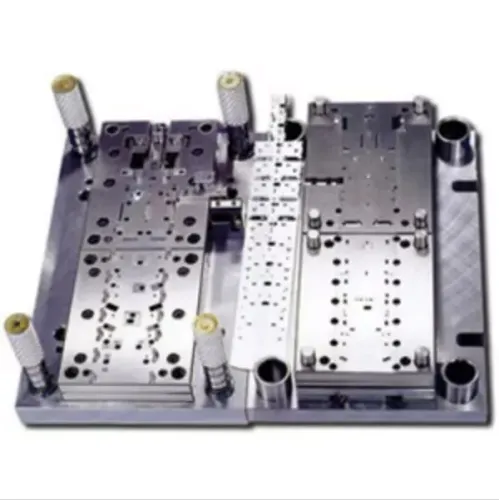
Defence manufacturing can involve components where dimensional accuracy, material control, repeatability, inspection, and documentation are closely connected. Selecting a Defence Precision parts manufacturer therefore requires a structured technical assessment rather than a decision based only on machining capacity.
Procurement teams should first define what the component actually demands and then determine whether the prospective supplier's processes are suited to those requirements.
Drawing complexity should guide capability assessment
A supplier may have CNC equipment but still lack the process capability needed for a specific component.
Critical features may involve tight positional relationships, precision bores, controlled profiles, surface requirements, complex datums, or difficult-to-machine materials.
The evaluation should consider whether the manufacturer can translate these requirements into a stable machining and inspection plan.
Ask how manufacturing variation is controlled
Precision manufacturing is not simply about reaching a target dimension once. The process needs to maintain acceptable results across repeated production.
Important areas to evaluate include:
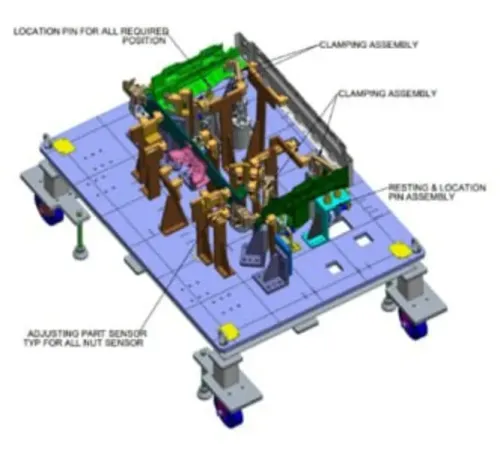
- Workholding strategy
- Datum control
- Tool management
- Machine capability
- In-process inspection
- Final inspection
- Handling of non-conforming parts
- Drawing revision control
For particularly demanding components, the sequence of machining operations can be as important as the individual machine used.
Material control deserves specific attention
Critical components may require specified grades and material conditions. Procurement teams should understand how incoming material is identified and controlled throughout manufacturing.
Where project requirements call for specific documentation or traceability, these expectations should be agreed upon before production begins.
The same principle applies to outsourced processes such as heat treatment, coating, grinding, or other specialized operations. Their impact on final dimensions and component performance needs to be incorporated into process planning.
Inspection capability should match drawing requirements
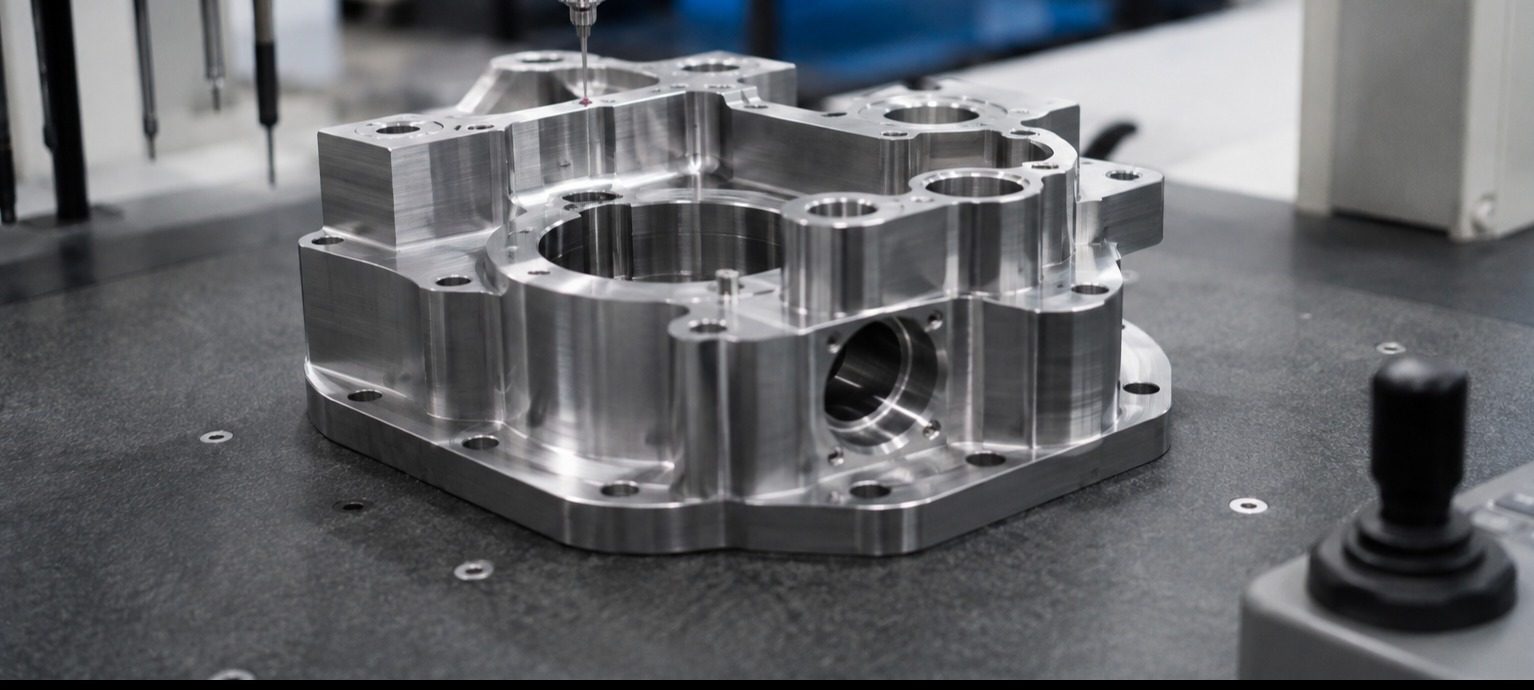
The supplier should be able to explain how critical dimensions will be measured. A tolerance that cannot be reliably inspected creates uncertainty regardless of machining capability.
Depending on the component, inspection may involve conventional precision instruments, gauges, specialized fixtures, profile measurement, or coordinate measurement methods.
Buyers should also examine calibration practices and the handling of inspection records according to applicable project requirements.
Production readiness goes beyond equipment
A technically suitable supplier should demonstrate a controlled route from drawing review through manufacturing and inspection.
For defence and precision engineering businesses sourcing from Pune and the wider Maharashtra manufacturing region, practical coordination can also matter when components require development discussions, trial quantities, tooling changes, or detailed technical reviews.
Excellent Tools supports high-precision industrial manufacturing requirements where tooling, machining, fixturing, and inspection need to be aligned with the component application.
When assessing a Defence Precision parts manufacturer, procurement teams can use actual component requirements as the evaluation framework. Instead of asking only which machines the supplier owns, ask how the part will be located, manufactured, measured, documented, and controlled across repeated production.
That approach provides a clearer indication of whether the supplier's manufacturing system is ready for the technical demands of the project.
Keywords