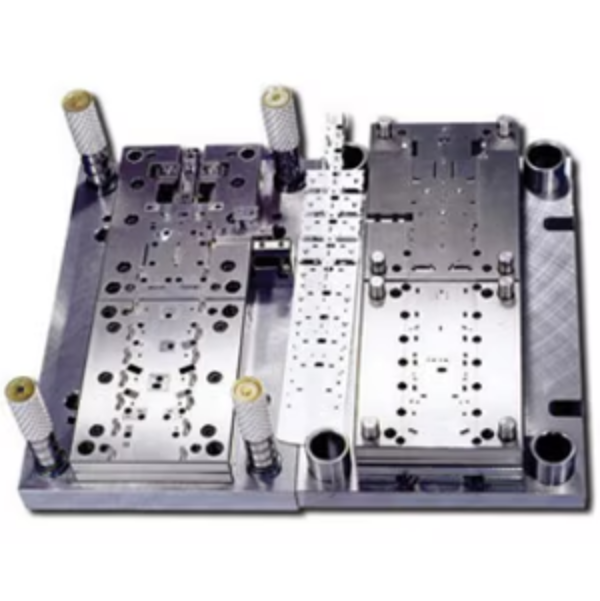
Press tools have a direct influence on sheet metal component accuracy, repeatability, production speed, material utilization, and tool maintenance. Selecting a Sheet Metal Press Tools Manufacturer therefore requires more than reviewing whether a supplier can manufacture a die from a drawing.
The stronger evaluation focuses on whether the supplier understands how tool design, press conditions, sheet material, production quantity, and component geometry interact.
Begin with component manufacturability
Before tool manufacturing starts, the component should be evaluated for practical forming and cutting requirements.
Important considerations can include material thickness, bend geometry, hole locations, forming depth, springback, burr direction, dimensional tolerances, and critical assembly features.
A capable tooling team should be able to identify areas where the component may create manufacturing difficulties and discuss practical solutions before the tool enters production.
Tool type should suit the production programme
Not every sheet metal part requires the same tooling approach. The appropriate configuration depends on geometry, output volume, press availability, cycle requirements, and investment considerations.
Buyers should evaluate whether the proposed tooling concept supports the intended production quantity without introducing unnecessary complexity.
Tool accessibility and maintenance should also be considered. Wear components will eventually need inspection, adjustment, sharpening, or replacement.
Ask how accuracy will be verified
Tool trials provide important information about the relationship between tool design and actual component output. A supplier should have a structured approach for checking trial components and identifying the source of dimensional deviations.
Evaluation points may include:
- Critical component dimensions
- Burr condition
- Forming consistency
- Surface condition
- Hole positioning
- Repeatability across trial pieces
- Tool alignment
- Ease of component removal
A successful first sample is useful, but production consistency is the larger objective.
Review manufacturing capability behind the tool
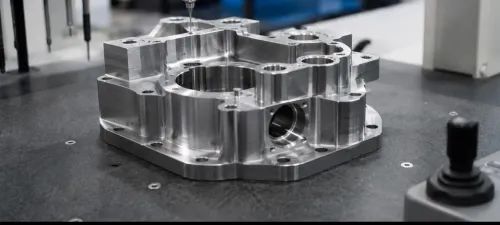
Tool performance depends on the accuracy and quality of its individual elements. Buyers should understand the supplier's capability in precision machining, grinding where required, fixture development, inspection, assembly, and tool trials.
Material selection and heat treatment strategy for punches, dies, guide elements, and wear components can also influence service life.
For automotive and industrial manufacturers in Pune and throughout Maharashtra, these considerations become particularly important when press tools support recurring production schedules.
Maintenance readiness can reduce future disruption
A tool should not become difficult to service after commissioning. Replaceable wear elements, clear component identification, practical disassembly, and suitable maintenance access can improve long-term usability.
Procurement teams can also ask what technical information will be available after tool completion and how future modifications will be handled if the component changes.
Excellent Tools supports industrial tooling requirements for manufacturers where production accuracy and tool reliability need to work together.
When evaluating a Sheet Metal Press Tools Manufacturer, buyers should look beyond the initial quotation and examine design understanding, precision manufacturing capability, trial methodology, inspection approach, maintainability, and production support.
A press tool becomes part of the manufacturing process for potentially thousands of cycles. Selecting the provider around long-term production performance can therefore be more valuable than choosing solely on initial tooling cost.
Keywords