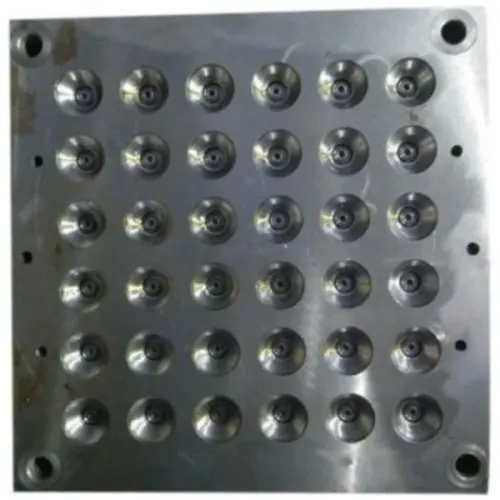
Rubber components can appear simple, yet producing them consistently can involve complex interactions between mold design, material behaviour, pressure, temperature, venting, and dimensional requirements. An experienced Rubber Mold Manufacturer must therefore consider how the mold will behave during actual production rather than treating it only as a machined cavity.
For automotive, aerospace, industrial equipment, electrical, and engineering companies in Pune and other manufacturing regions of Maharashtra, mold quality can influence component dimensions, surface finish, production repeatability, and the amount of finishing required after molding.
Understanding common molding problems can help buyers identify what should be addressed during mold development.
Excess Flash Around the Component
Flash is excess rubber that appears around parting lines or other mold interfaces.
A small amount of flash may be expected with certain molding processes, but excessive flash can increase finishing work and may indicate problems with mold condition, alignment, process parameters, or parting surfaces.
Mold construction needs sufficient accuracy so mating surfaces close correctly.
Designers must also consider where the parting line is positioned. Placing it across a functionally important surface can make trimming more difficult or affect the finished appearance.
Incomplete Filling of the Mold
When rubber does not completely fill the intended cavity, the finished component may have missing features or incomplete edges.
Several factors can contribute to this problem, including material flow characteristics, processing conditions, insufficient material, trapped air, and cavity design.
The mold designer should consider how material will reach different areas of the component.
Thin sections, deep features, and complicated geometries may require particular attention because they can affect material flow and air evacuation.
Trapped Air Can Create Surface Problems
Air needs somewhere to escape as material fills the cavity.
If it becomes trapped, defects can develop in areas where air pockets form. Proper venting is therefore an important element of mold design.
Vents need to be positioned carefully and sized appropriately. Poorly designed venting may fail to release air effectively, while inappropriate vent dimensions can create other molding concerns.
The correct arrangement depends on the component and process.
Mold Alignment Influences Component Consistency
Two mold halves need to maintain the required relationship during repeated production cycles.
Misalignment can affect parting lines, wall thickness, component geometry, and flash formation.
Guiding and locating features are therefore important parts of mold construction.
These features should be manufactured accurately and designed to withstand repeated use. As production continues, wear in locating elements can also influence alignment, making maintenance important for long-term mold performance.
Shrinkage Must Be Considered Before Machining
Rubber components may change dimensions as they cool after molding.
The amount of shrinkage depends on several factors, including material formulation and processing conditions. This means a mold cavity cannot always be designed simply by reproducing the finished component dimensions.
Expected material behaviour needs to be considered during mold development.
When dimensional requirements are tight, communication between the component manufacturer, material team, molding team, and Rubber Mold Manufacturer becomes particularly valuable.
Component Removal Should Not Be an Afterthought
A mold may produce the correct geometry but still create production difficulties if components are hard to remove.
Part release should therefore be considered during design.
Deep features, undercuts, surface texture, component flexibility, and mold orientation can all affect removal.
An awkward demolding process may increase cycle time or create a risk of damaging components during extraction. Addressing this during the design stage can make production more practical.
Surface Finish Should Match the Application
Not every mold surface requires the same finish.
Sealing components may have functional surface requirements, while visible rubber products may need a particular appearance. Other industrial components may prioritise dimensional accuracy over cosmetic finish.
The mold surface should therefore be specified according to component function rather than applying the same finishing standard everywhere.
Trial Components Reveal More Than Mold Inspection Alone
Measuring the mold is essential, but inspecting actual molded components provides another level of information.
Trial production can reveal whether the interaction between mold geometry, rubber material, and processing parameters produces the intended result.
Engineering teams should evaluate trial samples for:
- Critical dimensions
- Flash
- Surface condition
- Incomplete filling
- Distortion
- Parting line quality
- Ease of removal
Findings can then guide corrections before regular production.
Pune's diverse manufacturing base includes automotive suppliers, industrial manufacturers, engineering businesses, and OEM operations that regularly depend on custom molded components. Local mold development can be especially useful when tooling trials, engineering discussions, and modifications require coordination between different teams.
Excellent Tools supports custom mold and precision engineering requirements based on component drawings and manufacturing specifications. Buyers can make the development process more efficient by sharing the rubber material details, component drawing, expected production quantity, molding process information, critical dimensions, and known production concerns before mold design begins.
The most effective way to prevent molding defects is to address potential causes before the mold reaches repetitive production. Careful design, accurate manufacturing, practical trials, and attention to material behaviour create a stronger foundation for consistent rubber component production.
Keywords