Manufacturing accuracy does not depend on the machine alone. How a component is located, supported, and held during machining, welding, drilling, assembly, or inspection can significantly affect the final result. This is why Jigs and fixtures are widely used when manufacturers need consistent positioning and repeatable production.
For engineering companies, automotive suppliers, aerospace manufacturers, and OEMs operating in Pune and across Maharashtra, correctly designed tooling can help make production processes more stable and easier to control.
Understanding what jigs and fixtures actually do is the first step toward deciding where they can add value.
What Is the Purpose of a Jig
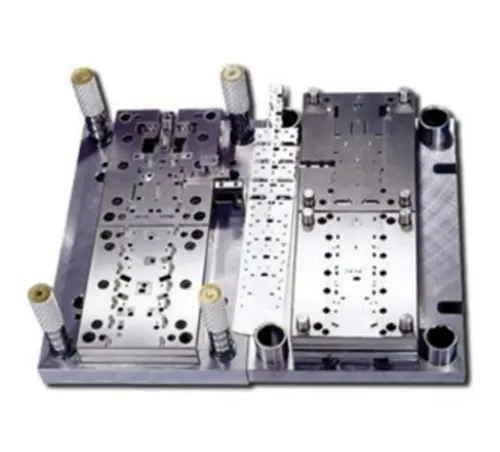
A jig is designed primarily to locate and hold a workpiece while also guiding a tool in certain manufacturing operations.
Drilling jigs are a common example. Instead of manually marking and positioning every hole, the jig establishes the required component location and guides the cutting tool according to the intended geometry.
This can be useful when the same operation must be repeated across multiple components.
Jigs can help reduce dependence on manual marking and repeated measurement, particularly for repetitive production tasks.
How a Fixture Works Differently
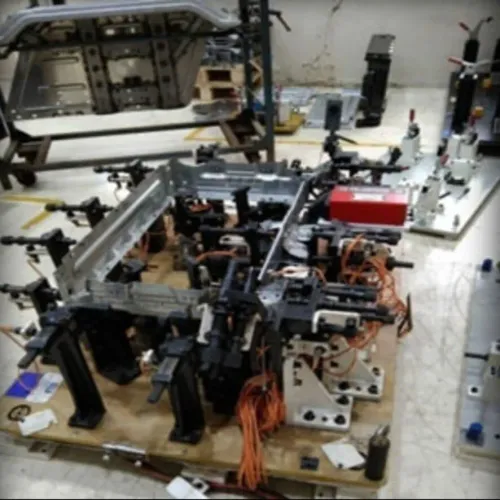
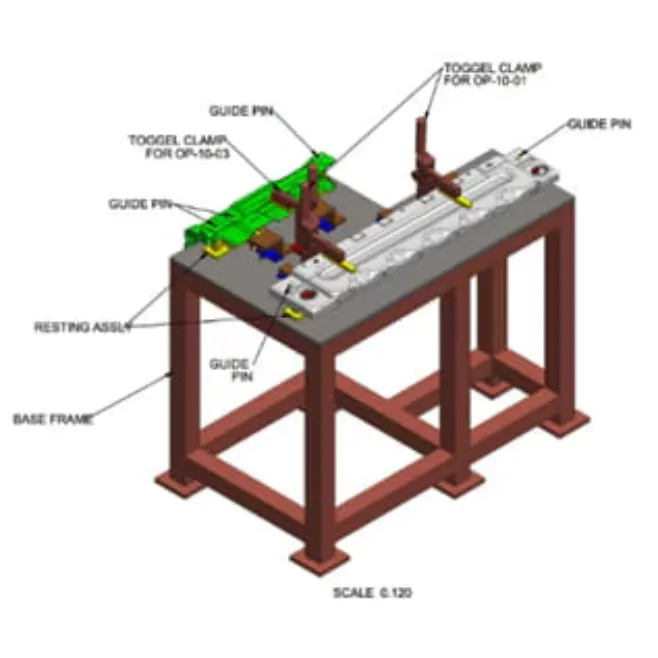
A fixture primarily locates, supports, and securely holds the workpiece. Unlike a jig, it generally does not guide the cutting tool.
Fixtures are used across many processes, including:
- CNC machining
- Milling
- Turning operations
- Welding
- Assembly
- Inspection
- Grinding
- Component testing
Their design depends heavily on component geometry and the manufacturing operation being performed.
Repeatable Location Is the Main Advantage
Consider a component that needs several machining operations.
If every workpiece is positioned manually, slight differences in location may occur between cycles. Even when each variation is small, it can influence feature positions and dimensional relationships.
A properly designed fixture establishes repeatable reference points.
The component can be positioned against defined locating surfaces before being clamped. This helps ensure that successive parts begin the operation from a consistent position.
For batch manufacturing, that consistency can be extremely valuable.
Good Fixture Design Starts With the Component
There is no universal fixture design suitable for every part.
Engineers must consider the component's geometry, material, tolerance requirements, machining forces, loading direction, and production quantity.
Clamping also needs careful attention.
Too little clamping force may allow the component to move. Excessive force can deform thin or delicate parts. The fixture therefore needs to hold the component securely without introducing unwanted distortion.
Accessibility is another consideration. A fixture should not unnecessarily obstruct the areas that need machining, welding, inspection, or assembly.
Jigs and Fixtures Can Reduce Setup Variation
Repeated setup is a common source of manufacturing variation.
When operators need to locate a component manually for every cycle, results can become dependent on individual technique and experience. Purpose-built tooling can simplify this process by establishing clear locating and clamping positions.
This does not eliminate the need for skilled operators. Instead, it gives operators a more controlled method for performing repetitive tasks.
The benefit becomes increasingly noticeable as production quantities grow.
Production Efficiency Is Not Just About Cycle Time
Manufacturers sometimes evaluate tooling only by asking whether it makes the machine run faster.
That overlooks several other sources of production time.
An effective fixture may reduce time spent on:
- Component alignment
- Repeated measurements
- Marking operations
- Setup adjustments
- Repositioning
- Correcting avoidable location errors
Reducing these activities can improve overall process efficiency even when the actual machining cycle remains unchanged.
Inspection Fixtures Have a Different Role
Fixtures are not limited to production operations.
Inspection fixtures can establish a consistent orientation for checking components. This can make repetitive quality checks easier and help reduce variation in how parts are presented for measurement.
For high-volume or geometrically complex components, dedicated checking arrangements may support a more organised inspection process.
When Custom Tooling Makes Practical Sense
Not every manufacturing job requires dedicated tooling.
Custom Jigs and fixtures become particularly relevant when:
- The same component is produced repeatedly
- Location accuracy is important
- Manual setup consumes significant time
- Several features must maintain a defined relationship
- Welding distortion needs better control
- Assembly positioning must remain consistent
- Production quantities justify dedicated tooling
For prototypes or very small quantities, flexible workholding may sometimes be more practical. The decision should therefore consider both technical requirements and expected production volume.
Pune's automotive, aerospace, engineering, and industrial manufacturing base creates substantial demand for specialised production tooling. Companies working with OEM programmes often need tooling that fits existing machines, manufacturing sequences, operator access requirements, and inspection procedures.
Excellent Tools supports custom tooling and precision engineering requirements for industrial applications. When developing a new jig or fixture, providing the component drawing, operation details, machine information, expected quantity, tolerance requirements, and existing process challenges can make the design discussion considerably more productive.
The most effective tooling is not simply a structure that holds a component. It is an engineered part of the production process designed around repeatability, accessibility, stability, safety, and the actual requirements of the job.
Keywords