Choosing an Injection Molding Manufacturer becomes more complex when plastic parts are expected to meet tight dimensional requirements, fit accurately into assemblies, or perform consistently across large production batches. The lowest quotation may look attractive initially, but tooling quality, process control, material understanding, inspection capability, and production repeatability can have a much greater effect on the total manufacturing cost.
For automotive companies, industrial manufacturers, OEMs, and engineering businesses in Pune and across Maharashtra, supplier evaluation should begin with the component requirement rather than production capacity alone.
Check Experience With Similar Component Complexity
Injection molded parts can range from basic covers and housings to components containing ribs, bosses, threads, snap features, inserts, thin walls, and complex geometries.
A supplier experienced primarily with simple parts may not necessarily be the right choice for a technically demanding component.
Before finalising a manufacturer, examine whether the team can interpret:
- Detailed component drawings
- Dimensional tolerances
- Functional mating requirements
- Material specifications
- Surface requirements
- Critical-to-quality dimensions
- Expected production volumes
Understanding these factors early can prevent costly changes after tooling development.
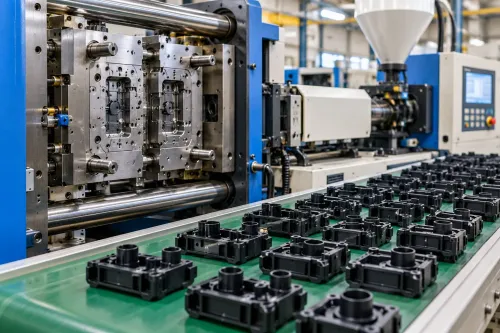
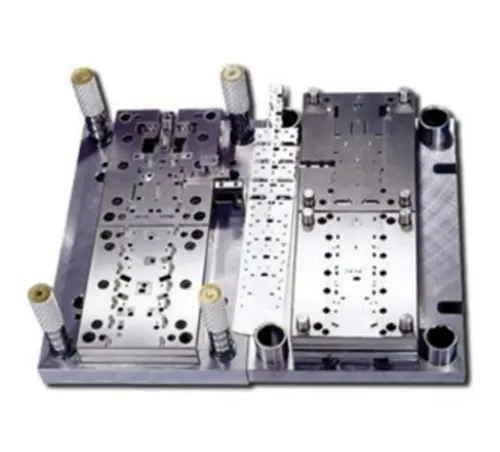
Look at Mold Development Capability
The quality of an injection molded component is closely connected to the quality of its mold.
Tool design influences material flow, cooling, part release, dimensional stability, surface condition, and production cycle consistency. Features such as gate position, runner arrangement, venting, cooling channels, ejector placement, and draft need to suit the component.
A manufacturer with access to strong mold design and precision toolmaking capabilities can address potential production concerns before regular molding begins.
This becomes particularly useful when component development requires modifications following trials.
Ask How Material Selection Is Handled
Plastic material selection should be based on the intended application rather than price alone.
Different engineering polymers offer different levels of strength, flexibility, temperature resistance, dimensional stability, chemical resistance, electrical properties, and wear behaviour.
Material characteristics also influence the molding process.
A suitable Injection Molding Manufacturer should understand the specified material and how its processing characteristics may affect the finished component.
Where the customer has already selected a material grade, its requirements should be considered during both mold design and process planning.
Evaluate Dimensional Control
A component that looks correct can still create assembly problems.
Dimensions affecting mating surfaces, holes, clips, locating features, wall thickness, and alignment may need particularly close attention. Shrinkage and warpage can further influence dimensional results.
Ask how critical dimensions are identified and measured.
Depending on the requirement, inspection may involve conventional instruments, gauges, fixtures, or more advanced measurement methods.
The important point is that the measurement approach should be suitable for the specified tolerance and component geometry.
Understand How Process Repeatability Is Maintained
A successful initial sample does not automatically demonstrate stable production.
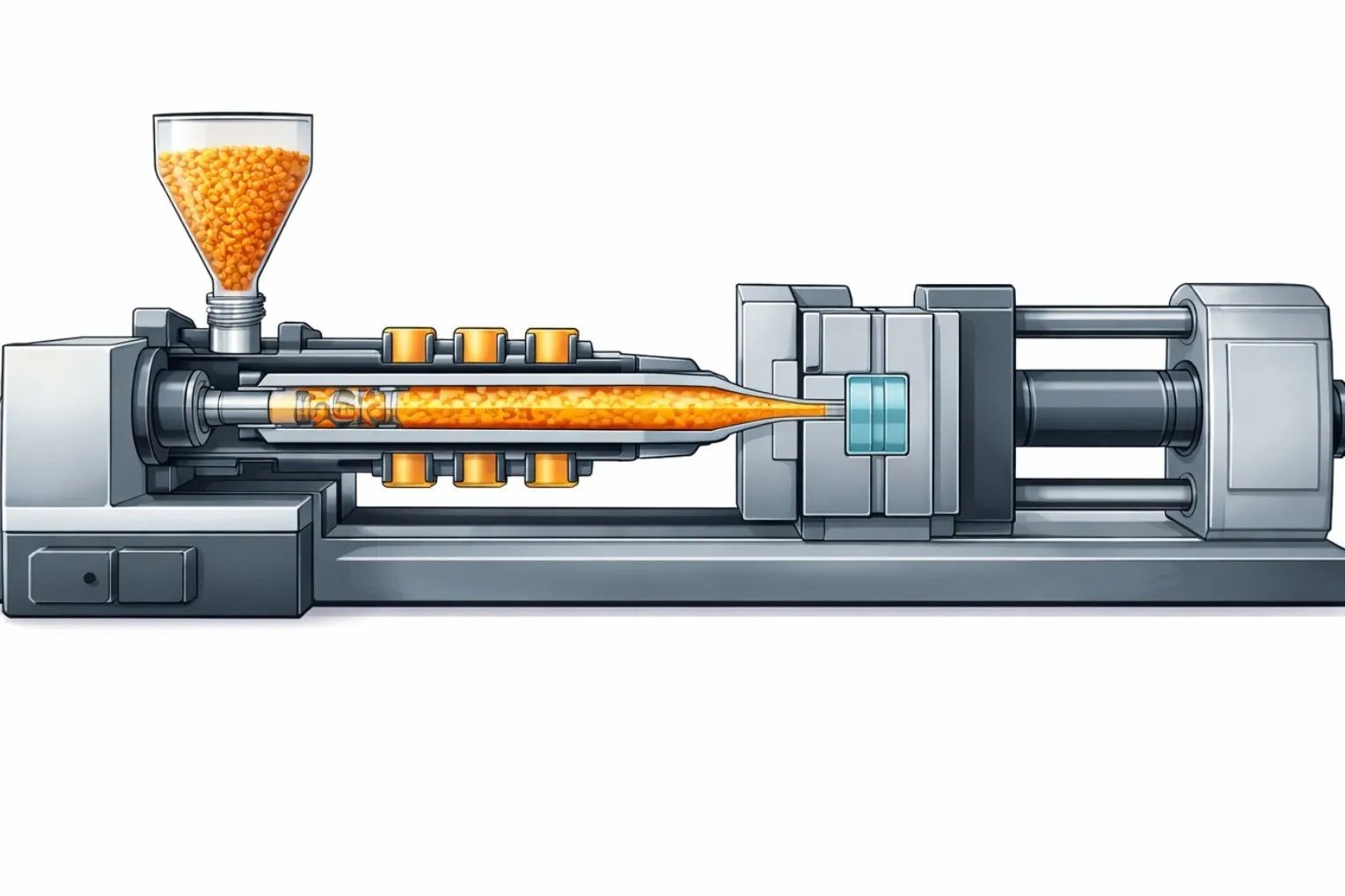
Injection molding involves several process variables. Temperature, pressure, cooling, material condition, and cycle parameters can influence part quality.
For recurring OEM production, buyers should understand how approved settings and manufacturing conditions are maintained after sample approval.
A controlled process reduces unnecessary variation between batches and helps quality teams investigate deviations more systematically when they occur.
Examine the Approach to Trial Production
Tool trials provide an opportunity to identify problems before full production.
Trial components should be examined for dimensional accuracy as well as visible defects.
Typical concerns can include:
- Sink marks
- Warpage
- Short filling
- Flash
- Weld lines
- Surface defects
- Ejection marks
- Dimensional variation
A good trial process does not simply identify a defect. It helps determine whether the cause relates to tooling, material, component design, or process parameters.
That distinction matters because each cause requires a different corrective action.
Consider Engineering Changes and Tool Maintenance
Plastic components often evolve during product development.
A mating component may change, a feature may need reinforcement, or an assembly issue may require dimensional modification. Buyers should therefore understand whether the tooling can accommodate reasonable engineering changes and how modifications are managed.
Maintenance is equally important for repeat production.
Molds contain moving, guiding, ejecting, and forming elements that can experience wear. Planned maintenance can help preserve mold condition and component consistency over longer production runs.
Compare Total Manufacturing Value
Procurement decisions become stronger when they consider more than the per-part quotation.
Evaluate factors such as:
- Tool development quality
- Component rejection risk
- Inspection capability
- Production consistency
- Engineering support
- Maintenance requirements
- Lead-time reliability
- Ability to manage future modifications
A slightly lower unit price can lose its advantage if inconsistent components cause sorting, rework, assembly delays, or repeated production interruptions.
Pune has a mature automotive, engineering, and industrial manufacturing ecosystem, giving businesses in Maharashtra access to a broad supplier network. The challenge is identifying a provider whose technical capabilities match the actual component requirement.
Excellent Tools supports precision engineering, tooling, and custom manufacturing requirements for industrial applications. When evaluating injection molding requirements, buyers can improve technical discussions by providing complete drawings, material specifications, annual quantities, critical dimensions, mating details, and expected quality requirements.
The strongest supplier choice is ultimately the one that can translate those requirements into a repeatable manufacturing process rather than simply produce an acceptable first sample.
Keywords