Choosing a Metal Cutting Machine is a production decision with consequences for capacity, accuracy, operating cost, maintenance, and future manufacturing flexibility. Comparing machines only by purchase price can therefore produce an incomplete evaluation.
The right equipment depends on what needs to be cut, how frequently it will run, the required accuracy, and how the machine fits into the broader production process.
Start with the material and component requirement
Different materials behave differently during cutting. Mild steel, stainless steel, aluminium, alloy steels, and specialized engineering materials can place different demands on tools, cutting parameters, machine rigidity, and power.
Before comparing equipment, manufacturers should document the expected material range, maximum workpiece dimensions, thickness range, component geometry, and production quantity.
This immediately narrows the equipment options to machines that suit actual production needs.
Accuracy and repeatability need separate attention
A machine may be capable of producing an accurate sample under ideal conditions, but production teams also need to understand how consistently that accuracy can be maintained across repeated cycles.
When evaluating equipment, consider:
- Required dimensional tolerances
- Machine rigidity
- Spindle and axis capability where applicable
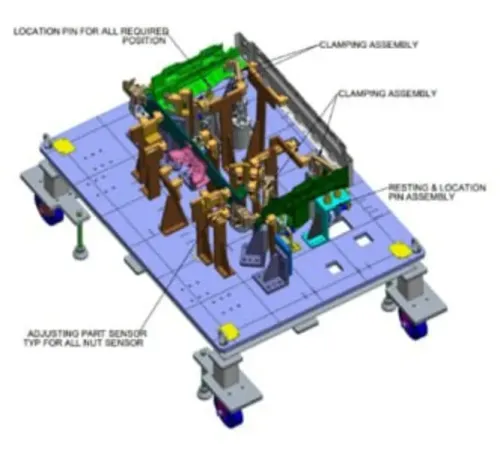
- Workholding requirements
- Tooling compatibility
- Repeatability
- Inspection method
- Expected production environment
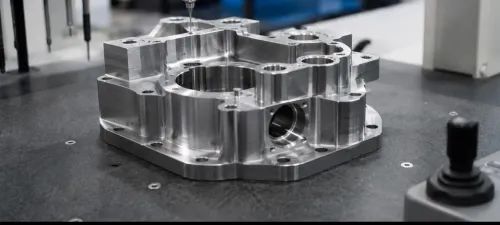
For precision engineering applications, workholding and tooling can influence final results just as much as machine specifications.
Cycle time affects the real cost of production
A lower-priced machine may become expensive if it creates slow production, frequent tool changes, excessive setup time, or high maintenance requirements.
Production teams should estimate the complete manufacturing cycle, including loading, setup, cutting, unloading, inspection, and routine stoppages.
For high-volume manufacturing, even a modest cycle-time improvement can become significant when multiplied across thousands of parts.
Consider future production requirements
Manufacturers sometimes purchase equipment around one current component and later discover that the machine cannot accommodate new work.
A better evaluation considers reasonable future requirements without paying for unnecessary capacity. Machine size, tooling range, automation compatibility, control capability, fixture flexibility, and serviceability may all influence long-term usefulness.
This is particularly relevant for Pune-based automotive suppliers and engineering manufacturers that frequently handle new product development, component revisions, and changing customer programmes.
Maintenance should be part of the buying decision
Machine availability directly affects production capacity. Buyers should understand preventive maintenance requirements, consumable availability, spare parts, operator skills, and the expected service environment.
The cheapest purchase price does not necessarily translate into the lowest cost per manufactured component.
Excellent Tools works within Pune's precision engineering and industrial tooling ecosystem, where equipment decisions often connect with fixture design, machining strategy, component accuracy, and automation requirements.
Before finalizing a Metal Cutting Machine, manufacturers should therefore build a requirement sheet around actual production data. Material, dimensions, tolerance, quantity, cycle expectations, workholding, maintenance, and future capacity should all be considered.
This approach makes equipment evaluation more objective and helps procurement teams compare machines according to manufacturing value rather than isolated specifications.
Keywords