Press tool performance can directly influence component accuracy, production consistency, material utilisation, and the amount of rework required on a manufacturing line. For that reason, selecting a capable sheet metal press tools manufacturer should involve more than comparing quotations or checking whether a supplier can build a die from a drawing.
Automotive suppliers, engineering companies, OEMs, and industrial manufacturers in Pune and across Maharashtra often require press tools for components that must be produced repeatedly within defined dimensional limits. The right tooling approach depends on component geometry, sheet material, production volume, press capacity, and the operations required to create the finished part.
Start With the Component Drawing
A press tool project should begin with a detailed understanding of the component rather than immediate tool design.
The engineering team needs to examine factors such as:
- Component dimensions
- Sheet thickness
- Material grade
- Bend locations
- Hole positions
- Dimensional tolerances
- Surface requirements
- Expected production quantity
These details influence the type and complexity of tooling required.
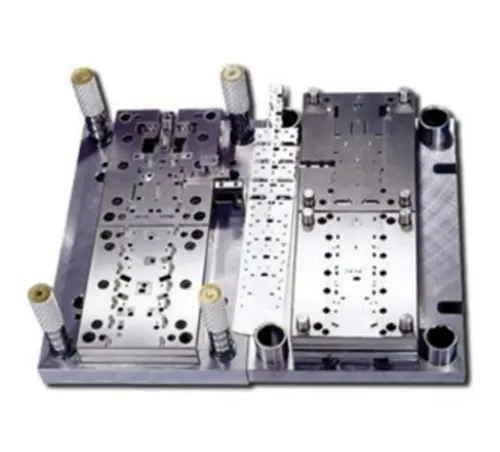
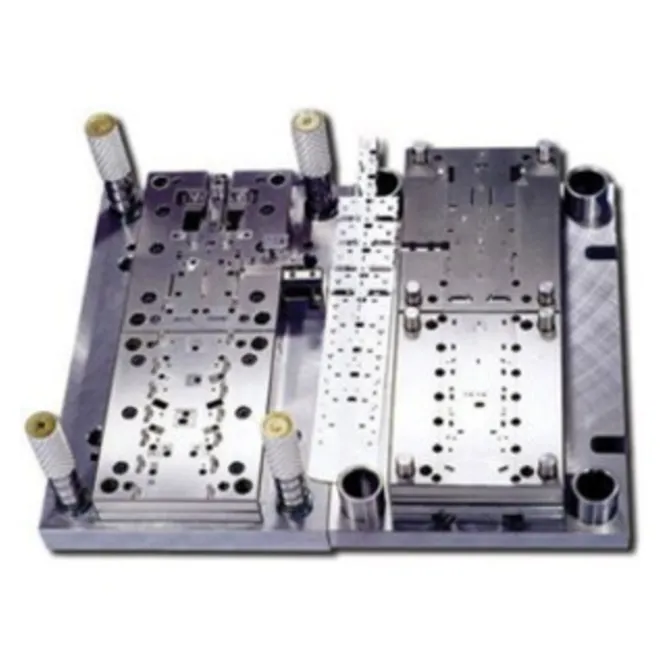
A relatively simple component may need basic blanking, piercing, or bending operations. A more complex component could require several forming stages or a progressive tooling approach.
Check Whether the Tool Design Matches Production Volume
Production quantity is an important consideration when selecting tooling.
For smaller quantities, a simpler tool arrangement may sometimes meet the requirement. High-volume production generally places greater emphasis on tool durability, cycle consistency, ease of maintenance, and efficient material movement.
A manufacturer should therefore understand the expected production lifecycle before finalising the design.
Building unnecessarily complex tooling for a limited requirement can increase initial investment. At the same time, under-designing a tool intended for repetitive high-volume production can create maintenance and consistency problems later.
Evaluate the Manufacturer's Tool Design Capability
Good press tooling begins before machining starts.
The tool designer needs to understand how sheet metal behaves during cutting, bending, and forming. Factors such as material flow, springback, clearances, punch and die relationships, and component release can influence the finished part.
Tool design should also consider how operators will load material, remove components, maintain the tool, and identify wear.
A technically sound design can prevent many production difficulties that would otherwise appear during trials.
Ask About Tool Material Selection
Press tool components experience repeated mechanical loads and wear. Material selection therefore matters.
Different elements of the tool may require different materials depending on their function. Cutting elements, guiding components, structural plates, and supporting parts do not necessarily experience the same conditions.
Heat treatment may also be required for specific tool components.
Rather than asking only which steel is being used, procurement teams should understand why a particular material and treatment have been selected for the intended production requirement.
Look Closely at Manufacturing Accuracy
The accuracy of the tool influences the accuracy and repeatability of the components it produces.
Punches, dies, guides, locating elements, and mating features need to be manufactured and assembled according to the required specifications.
This makes precision machining and inspection capabilities important when assessing a tooling supplier.
A capable sheet metal press tools Manufacturer should be able to work from detailed engineering information and maintain control over critical tool dimensions throughout manufacturing and assembly.
Tool Trials Are an Important Part of Development
A newly manufactured tool should be evaluated under practical operating conditions before regular production begins.
Trials can reveal issues that may not be obvious during design.
These can include:
- Inconsistent component release
- Burr formation
- Dimensional variation
- Material feeding difficulties
- Unexpected springback
- Forming marks
- Alignment concerns
Trial observations allow appropriate adjustments to be made before the tooling enters routine production.
For buyers, understanding how the supplier handles tool trials and corrections is an important part of supplier evaluation.
Consider Maintenance From the Beginning
Every production tool experiences wear over time.
Good tooling design should therefore consider maintenance access and replacement of wear-prone components. If frequently serviced parts are difficult to reach or replace, maintenance downtime can increase.
Engineering teams should discuss expected production quantities, preventive maintenance requirements, spare components, and potential refurbishment needs before approving the final tooling approach.
Review the Supplier Beyond the Initial Price
A low initial tooling price does not automatically mean lower production cost.
Poor tool reliability can create expenses through downtime, rejected components, repeated adjustments, excessive maintenance, and inconsistent output.
When evaluating suppliers, consider:
- Tool design experience
- Precision machining capability
- Understanding of sheet metal processes
- Inspection facilities
- Trial capability
- Maintenance considerations
- Ability to make engineering modifications
Pune is one of Maharashtra's major automotive and engineering manufacturing centres, where press tooling supports numerous OEM and component production requirements.
Excellent Tools works with industrial customers on precision tooling and custom manufacturing requirements. Providing complete component drawings, sheet specifications, expected volumes, press information, and quality requirements at the beginning allows the tooling requirement to be evaluated more effectively.
A press tool should ultimately be judged by how reliably it supports production. Accurate components, repeatable operation, practical maintenance, and suitability for the intended production volume are stronger indicators of tooling value than purchase price alone.
Keywords