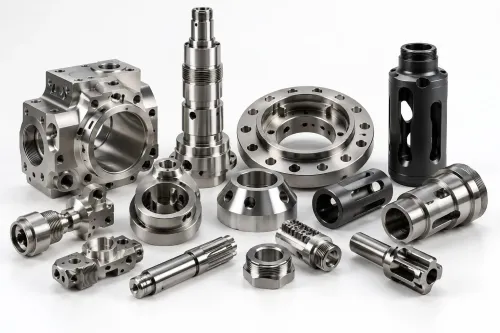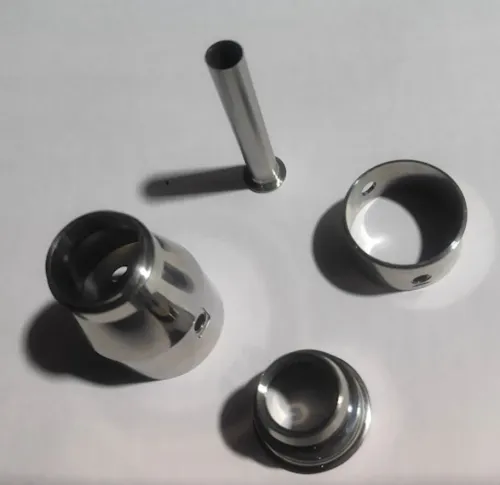

Efficient manufacturing depends on more than advanced machinery. Even highly sophisticated CNC machines or automated production systems require reliable work-holding solutions to achieve consistent quality. This makes choosing the right Jig and Fixture Manufacturer an important decision for manufacturers planning new production lines or improving existing operations.
Well-designed jigs and fixtures increase production efficiency, improve repeatability, reduce operator dependency, and help maintain consistent quality across large production volumes.
Understanding the Difference Between Jigs and Fixtures
Although often mentioned together, jigs and fixtures serve different purposes.
A jig primarily guides the cutting tool while holding the workpiece in the correct position.
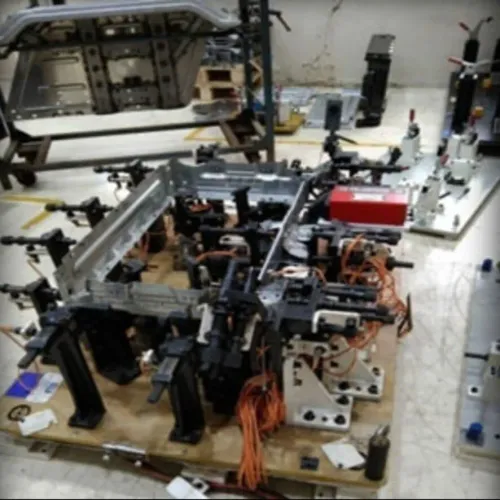
A fixture securely holds the workpiece during machining, welding, assembly, inspection, or other manufacturing processes but does not guide the tool itself.
Both are essential for maintaining process consistency in precision manufacturing.
Why Custom Jigs and Fixtures Matter
Every manufacturing process has unique requirements. Product dimensions, production volume, machining sequence, and operator workflow all influence tooling design.
Custom-built jigs and fixtures offer several advantages:
- Improved dimensional consistency
- Faster production cycles
- Reduced setup time
- Lower rejection rates
- Enhanced operator safety
- Better repeatability across batches
These benefits become even more valuable in industries producing high-volume precision components.
Questions to Ask Before Choosing a Manufacturer
Selecting the right manufacturing partner requires careful evaluation.
Consider asking:
Does the company understand your production process?
A good manufacturer studies the application before designing tooling rather than offering generic solutions.
Can they handle complex geometries?
Precision tooling often requires advanced machining capabilities and engineering expertise.
What inspection methods are used?
Accurate inspection ensures finished jigs and fixtures meet required tolerances.
Can future modifications be supported?
Production requirements change over time, so tooling should be adaptable whenever possible.
Is manufacturing completed under quality-controlled processes?
Consistent manufacturing practices help ensure reliable tooling performance throughout its service life.
Industries That Depend on Precision Tooling
Custom jigs and fixtures are widely used across:
- Automotive manufacturing
- Aerospace production
- Defence engineering
- Industrial automation
- Sheet metal fabrication
- Welding applications
- Precision machining
- Assembly operations
Manufacturers in Pune increasingly invest in customized tooling to improve productivity while maintaining consistent quality standards.
Working with an Experienced Engineering Partner
An experienced tooling manufacturer typically combines design expertise, precision machining, inspection capability, and practical manufacturing knowledge. This integrated approach often produces tooling that fits seamlessly into existing production systems.
Businesses evaluating engineering partners frequently consider providers such as Excellent Tools, whose experience in precision engineering and industrial automation supports customized tooling requirements across multiple manufacturing sectors.
Final Thoughts
Choosing the right jig and fixture manufacturer is an investment in production quality rather than simply a tooling purchase. Well-designed fixtures improve efficiency, reduce production variability, and support consistent manufacturing performance over the long term. For manufacturers across Pune and Maharashtra, selecting a technically capable engineering partner can make a measurable difference in productivity, quality, and operational reliability.