Aerospace components often combine complex geometries, demanding materials, close dimensional tolerances, and strict inspection requirements. These characteristics make supplier selection significantly different from sourcing general-purpose machined parts. An Aerospace Precision Parts manufacturer needs more than capable machines. The entire manufacturing process must be planned around consistency, traceability, measurement, and control.
For aerospace suppliers, engineering companies, OEMs, and procurement teams in Pune and across Maharashtra, understanding these capabilities can make technical supplier evaluation more meaningful.
Precision Begins Before the Machine Starts
Machining is only one stage of precision component manufacturing.
Before production begins, engineers need to interpret the drawing, identify critical characteristics, understand datum structures, review material requirements, select appropriate tooling, and establish the machining sequence.
This planning becomes especially important when several close-tolerance features have relationships with one another.
For example, individually accurate holes may still create an unacceptable component if their positional relationship to a datum is incorrect.
Process planning therefore needs to consider the complete drawing rather than treating dimensions independently.
Machine Capability Must Match the Component
Not every precision component requires the same manufacturing equipment.
Component size, geometry, material, tolerances, surface requirements, and production quantity determine which machining processes are suitable.
Complex parts may require several operations or multiple setups. Every additional setup introduces another opportunity for positional variation, making workholding and datum control important.
A technically capable supplier should determine the manufacturing route according to the component rather than forcing every job into a standard process.
Micron-Level Requirements Change the Manufacturing Approach
As tolerances become tighter, variables that might be insignificant in general machining become increasingly important.
Tool condition, machine stability, fixture accuracy, measurement technique, temperature, and process sequence can all influence the result.
This means micron-level requirements should never be treated as simply another dimension on the drawing.
The manufacturer needs to identify which characteristics genuinely require close control and establish suitable production and inspection methods around them.
Aerospace Materials Require Appropriate Machining Strategies
Aerospace applications can involve aluminium alloys, stainless steels, alloy steels, and other specialised engineering materials.
Each presents different machining considerations.
Some materials generate substantial heat during cutting. Others may create tool wear challenges or require particular cutting strategies to maintain surface integrity and dimensional control.
Material knowledge helps determine suitable tooling, speeds, feeds, coolant strategy, and machining sequence.
It also helps avoid unnecessary trial-and-error during production.
Workholding Has a Direct Effect on Accuracy
A precision machine cannot compensate for poorly controlled workholding.
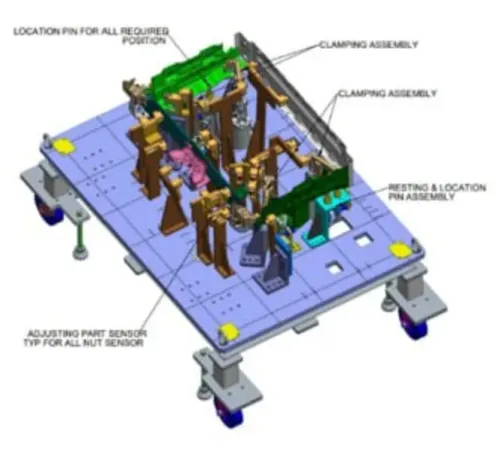
The fixture should establish repeatable component location while providing sufficient support against machining forces. At the same time, clamping should not distort the component.
Thin-wall and geometrically delicate parts can be particularly sensitive to clamping pressure.
Custom fixtures may therefore become an important part of the manufacturing strategy for certain aerospace components.
Inspection Should Be Planned Alongside Manufacturing
Waiting until production is complete to decide how a component will be inspected can create unnecessary problems.
Inspection planning should begin when the manufacturing process is developed.
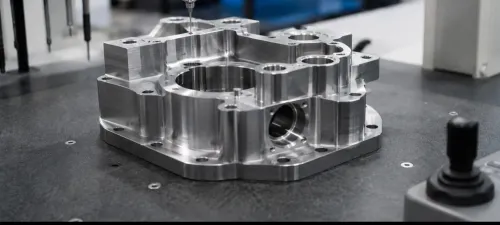
Critical features may require appropriate measurement methods based on their geometry and tolerances. Quality teams should also consider how the part will be located during measurement and which datum references need to be maintained.
Depending on customer requirements, inspection documentation may form part of the component delivery package.
Traceability Supports Better Production Control
Traceability helps connect a finished component with relevant manufacturing information.
The exact requirements vary according to the customer, programme, and applicable quality system. Depending on the project, records may relate to material, inspection, batch information, or manufacturing documentation.
For buyers, the important question is whether the Aerospace Precision Parts manufacturer has a systematic method for maintaining the records required by the specific job.
Assumptions should not replace clearly defined customer requirements.
Repeat Production Needs Consistency
A prototype component and a recurring production component create different manufacturing challenges.
During development, the emphasis may be on proving geometry and manufacturability. Once the component moves into regular production, repeatability becomes increasingly important.
Manufacturers then need to control:
- Workholding methods
- Tooling
- Machining sequences
- Inspection practices
- Critical dimensions
- Approved revisions
- Process changes
Uncontrolled changes between production batches can introduce variation even when the drawing remains the same.
Engineering Changes Need Clear Revision Control
Aerospace components may change during development or programme updates.
Manufacturing teams need to ensure they are working from the correct drawing revision. Continuing production from an obsolete revision can create expensive non-conforming inventory even if every manufactured dimension matches that outdated drawing perfectly.
Clear communication and document control therefore support precision just as much as machining accuracy.
Pune and the wider Maharashtra manufacturing corridor support aerospace, defence, automotive, and precision engineering supply chains. Businesses in this ecosystem often need suppliers capable of handling development work alongside repeat component production.
Excellent Tools works with precision engineering and custom manufacturing requirements based on customer specifications. For aerospace enquiries, supplying the latest drawing revision, material specification, required quantity, critical tolerances, inspection expectations, and any applicable documentation requirements creates a stronger basis for technical evaluation.
Ultimately, aerospace precision is not created by one machine or one final inspection. It comes from controlling the entire sequence from drawing review and process planning through machining, workholding, measurement, documentation, and repeat production.
Keywords